Mechanisms of the Seasonal Clock
Seasonal rhythms such as hibernation, migration, and seasonal reproduction are widespread in nature. In humans, many aspects of normal physiology and disease, including seasonal affective disorder and cardiovascular diseases follow notable seasonal patterns (Fig. 1).
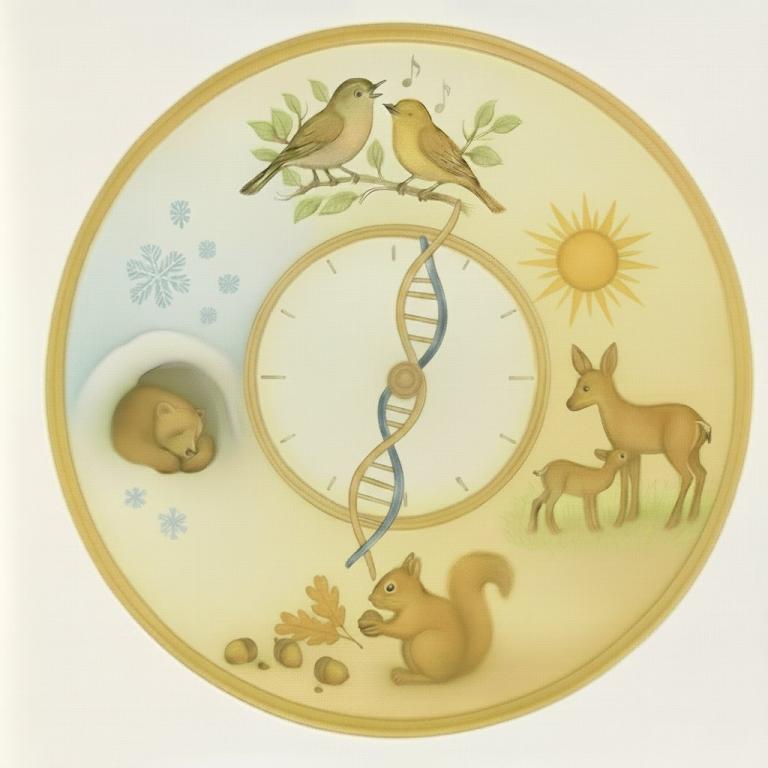
Classical work (Fig. 2) has revealed that seasonal rhythms, much like circadian rhythms, are driven by an endogenous clock. This “seasonal clock” (also termed circannual clock) is entrained by environmental cues like photoperiod, but continues to oscillate even in nonseasonal conditions, allowing organisms to anticipate and prepare for seasonal environmental changes.
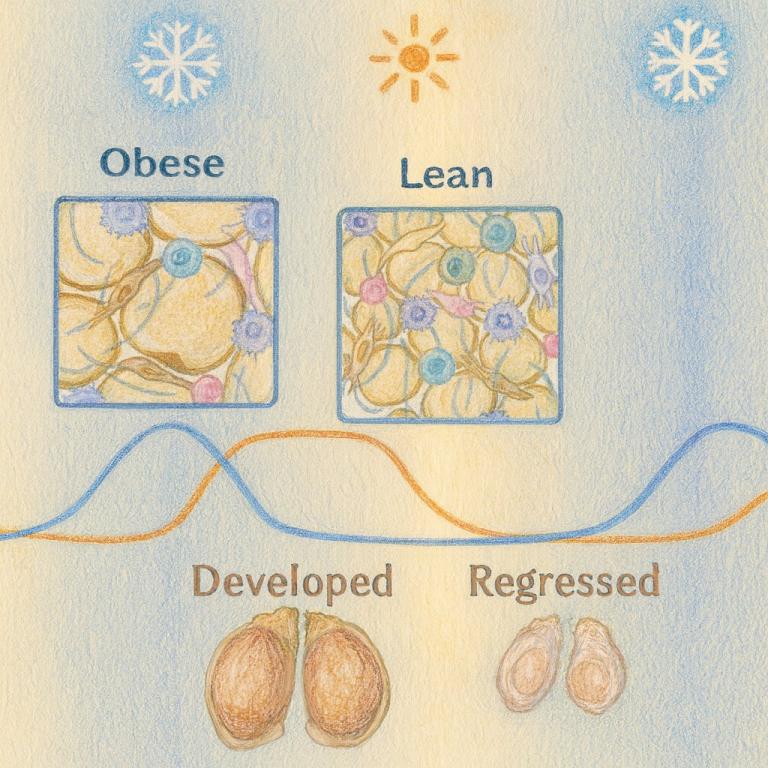
Despite its fundamental importance, little is known about the molecular basis of the seasonal clock. The mouse lemur, an emerging primate model, offers a valuable system to address this gap. Mouse lemurs show robust annual cycles of body weight, torpor, and gonadal development in the lab (Fig. 3). Building on the resources and tools we developed for this model, we combine molecular profiling with phenotypic screening to identify the genes and regulatory circuits that underlie the seasonal clock.
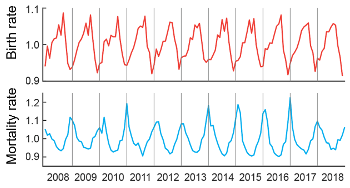
Fig 1. Human births and deaths follow persistent seasonal patterns.
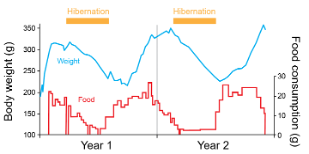
Fig 2. Ground squirrels continue free-running seasonal cycles of hibernation and body weight under nonseasonal conditions. Adapted from: Pengelley & Fisher 1957 Nature, 1963 Can. J. Zool.
Seasonal Metabolism & Tissue Plasticity
Seasonal adaptation ultimately manifests through profound changes across the body. The mouse lemur, for example, undergoes significant annual cycles of body weight, fat storage, and seasonal reproductive organ growth and regression (Fig. 3).
Such seasonal plasticity is widespread in nature across diverse organisms. Many seasonal songbirds show striking annual cycles of neurogenesis and neuronal loss. Shrews show reversible seasonal changes in the size of the brain and skull. Monarch butterflies show dramatic seasonal differences in lifespan, from only a few weeks to several months.
What enables animals to undergo such profound remodeling? Understanding this natural plasticity may uncover new principles of physiological regulation. In our lab, we combine cellular, molecular, and systems-level approaches to uncover the mechanisms underlying this fascinating aspect of seasonal biology.
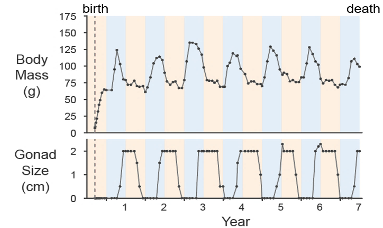
Fig 3. Seasonal cycles of body weight and gonad size in laboratory mouse lemurs.
Primate Model for Human Health
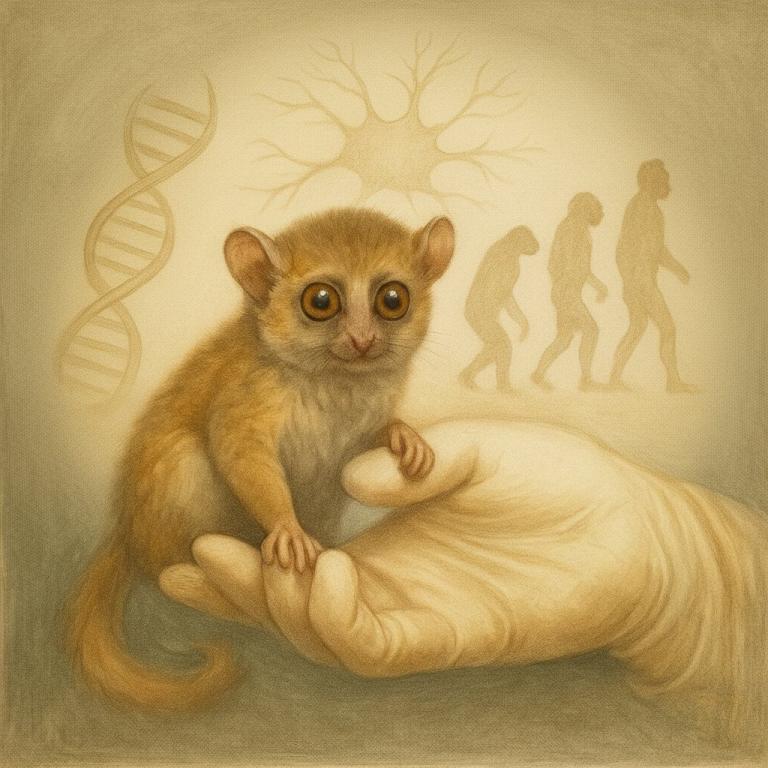
Model organisms have revolutionized biology, yet many important aspects of primate biology and disease are poorly represented in existing models. This limitation is well recognized in complex systems such as the brain. Mouse lemurs are the smallest and fastest-reproducing primates, and provide an attractive platform for studying primate genetics, evolution, and diseases that are difficult to approach in traditional models.
Our work on the Tabula Microcebus cell atlas and comparative analyses across lemur, human, and mouse identified molecular signatures of primate specialization and uncovered many genes for which lemur provides a closer human model than mouse (Fig. 4). Many of these genes are implicated in immune regulation and cancer. We combine computational and experimental approaches to investigate their functions and prioritize candidates for mechanistic studies of primate biology in health and disease.
We also collaborate to advance the mouse lemur as a model for sporadic Alzheimer’s disease (AD), addressing key limitations of rodent models. Like humans, aged mouse lemurs can spontaneously develop AD-like neurodegeneration, showing hallmarks of AD, including brain atrophy and widespread amyloid and tau pathologies. Through a comparative lens, we aim to identify primate mechanisms of neurodegeneration and resilience that are absent in rodents.
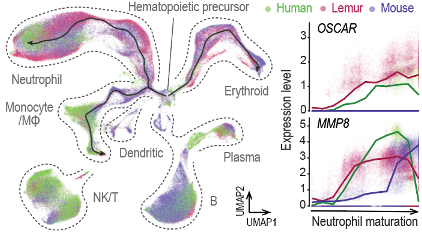
Fig 4. Evolutionary comparison of hematopoiesis identifies genes with primate expression patterns. Left: Species-integrated UMAPs. Right: example genes with primate-selective expression patterns during neutrophil development.
We gratefully acknowledge the generous support of UTSW, CPRIT, the Alfred P. Sloan Foundation, and Klingenstein Philanthropies.